
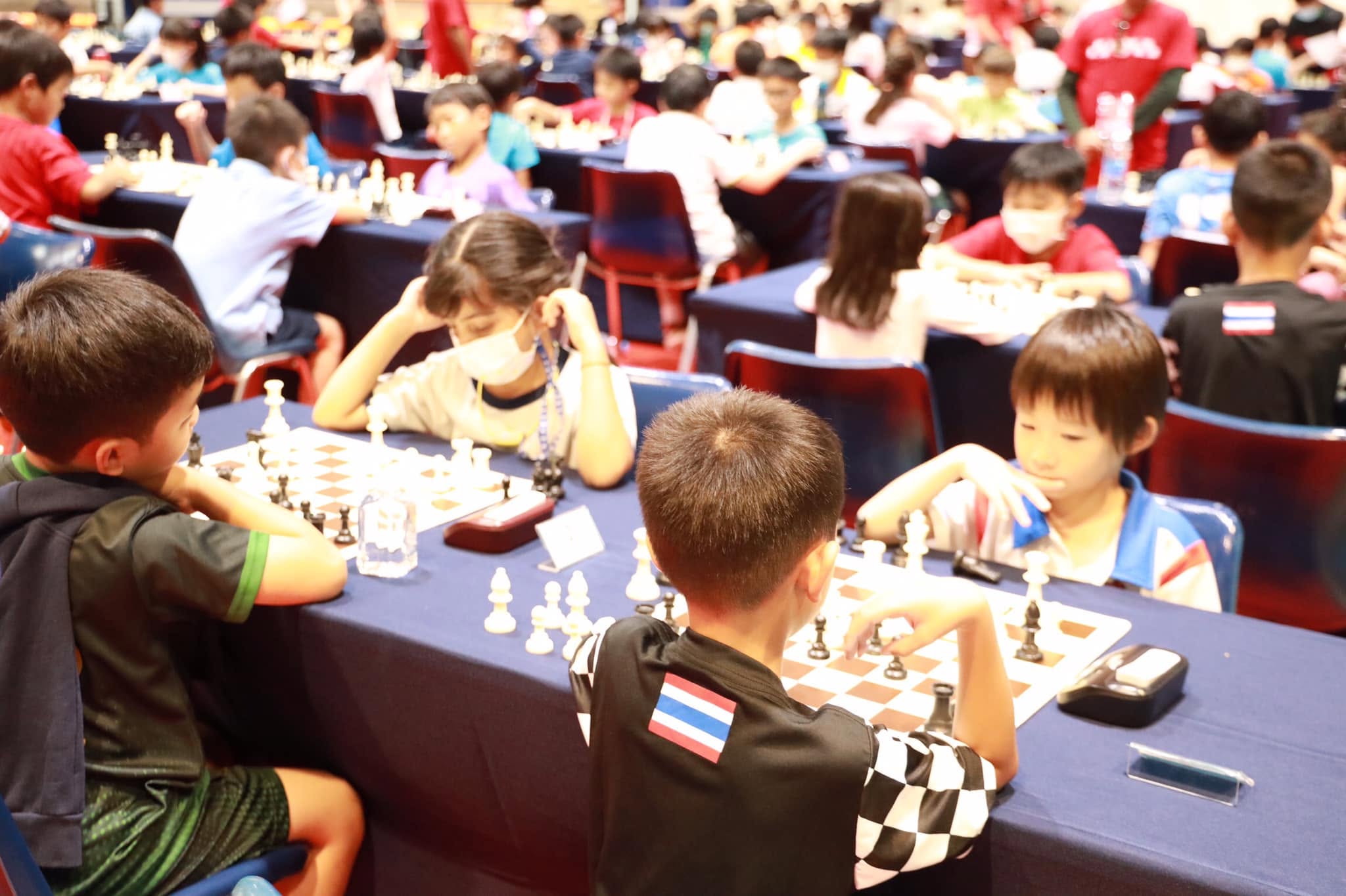
I have to admit, I’m an old-school player. Compared to the classical time controls back when I was coming up, today’s classical chess is just glorified rapid. I can still feel the exhaustion after the very first seven-hour game I ever played as a junior. You read that right: a seven-hour game. See, kids, back in the day, we had this weird device called an “analog chess clock.” It didn’t have a countdown display, let alone the ability to add a time increment on every move. Each player got two hours to make their first 40 moves. If you survived that, you got another hour for the next 20. If the game went past move 60, you got a final 30 minutes to sudden death. That added up to three and a half hours of thinking time per player—seven hours total.
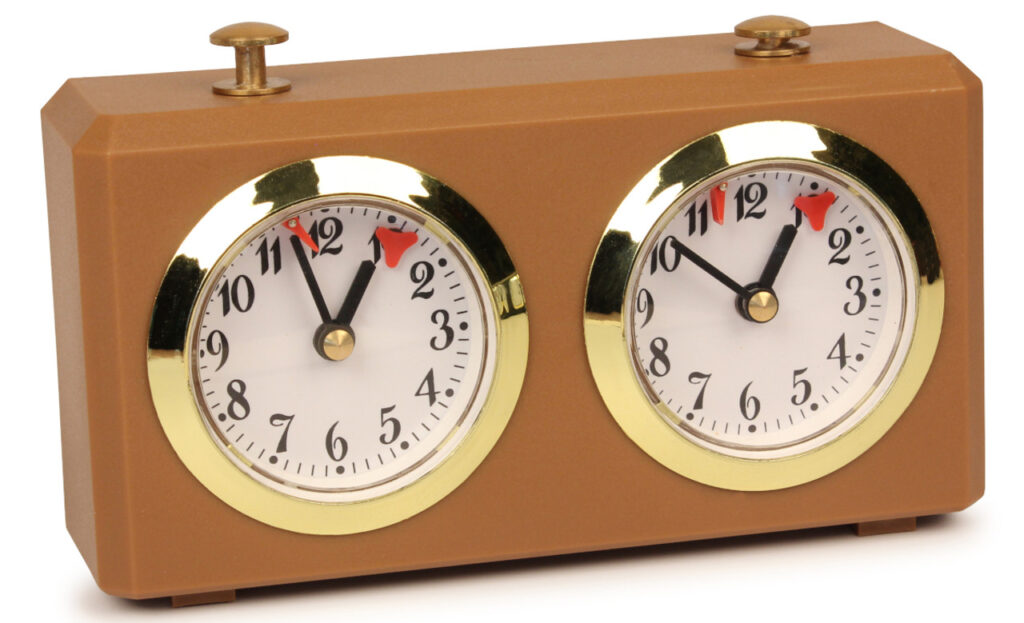
By the way, for those interested in antiques, we have these clocks in our chess shop.
The games started at 4:00 PM, and I was paired against a strong International Master from Bulgaria. I managed to survive whatever he threw at me in the opening and middlegame of a sharp King’s Indian Defense line, only to land in an arbiter’s absolute nightmare: a Rook and Bishop vs. Rook endgame. It’s the kind of position that guarantees the arbiters are going to miss dinner and go to bed hungry. We played around 120 moves, until we both had less than a minute left. On an analog clock, that is pure panic, because it’s impossible to tell if you have 30 seconds left or 3. Since I was the one fighting for a draw, it took tremendous effort and concentration to defend the position. Somehow, I managed to hold the draw. It was 11:00 PM.
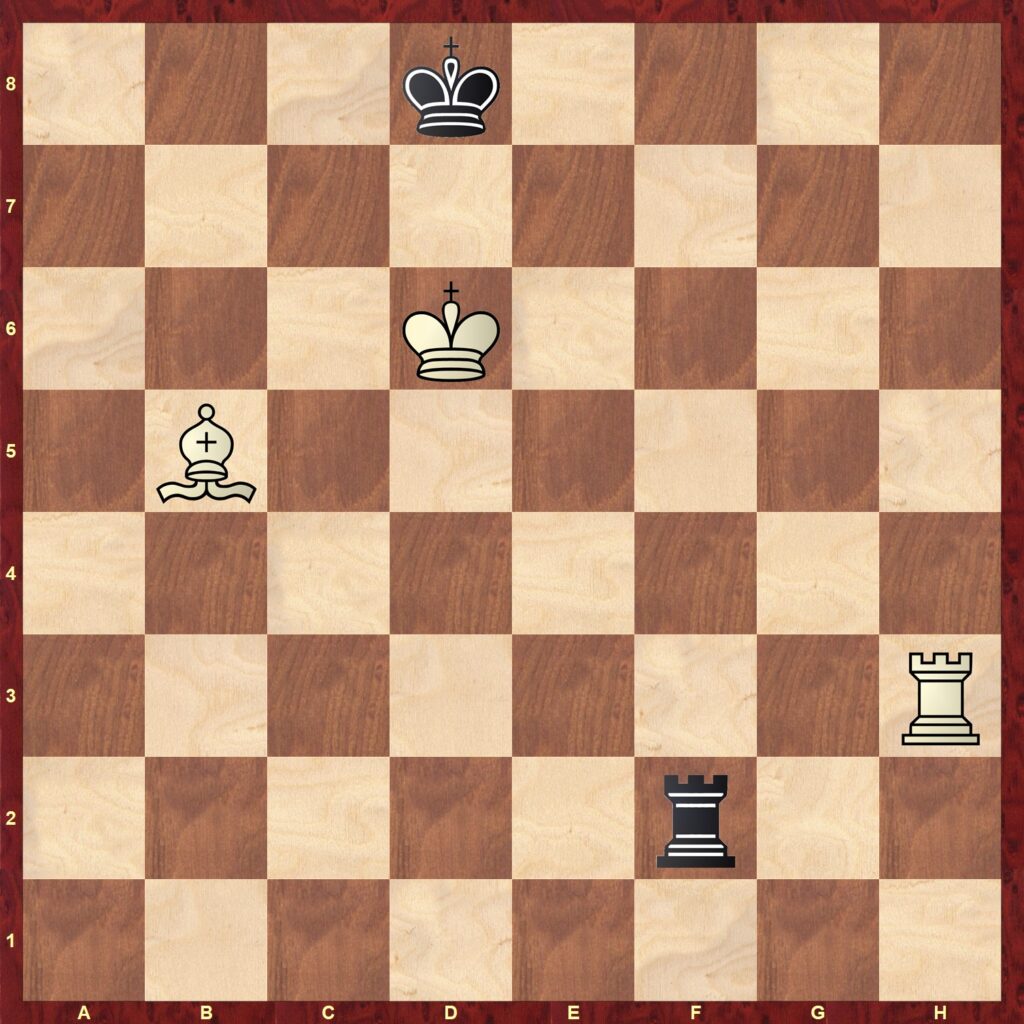
It is black to play, otherwise this would have been game over.
I felt exhausted, but at the same time, I felt happy and proud. I had fought very hard, and I got my reward. The draw that I earned after seven hours of fighting felt better than any victory I had experienced until that moment. Time is relative; it goes very slowly for the arbiters and the parents who are waiting, but it flies very quickly when a player is completely immersed in the game. I wasn’t complaining. I was looking forward to playing more games like the one that had just finished.
Fast forward to today: our game is getting faster and faster. We run from one rapid and blitz event to another, chasing rating points that shouldn’t even exist. Even the classical time control is getting shorter. When digital clocks first arrived, a widely accepted time control was 90 minutes for the first 40 moves, followed by 30 minutes for the rest of the game, with a 30-second increment for every move from the start. Needless to say, there was only one round per day, leaving the players enough time to prepare, eat, rest, and sometimes go sightseeing.
I have nothing against rapid and blitz chess. In fact, I organize these types of tournaments myself. They help my students improve many things. They help them improve their pattern recognition and detect flaws in their opening preparation. They gain confidence when they beat stronger players and masters, which in the early stages is much more likely to happen in a faster time control. They enjoy it, and they become more competitive.

However, some of the most important aspects of the game, such as calculation and developing a positional understanding, are taking a hit. A young player needs to learn how to calculate variations accurately. This includes identifying candidate moves, calculating forced lines, examining the opponent’s best responses, and evaluating the resulting position.
A player who mostly plays blitz may recognize a familiar pattern quickly, but struggle when the position requires ten minutes of careful calculation. The issue is not because of a lack of calculating ability, but more a lack of practice using that ability during actual games. Fast games do not help to improve concentration and patience. The habit of making a fast, “good-looking” move, which is important for rapid and blitz play, is harmful in a classical game. Unfortunately, this habit is easily transferable.
My main concern is not that rapid and blitz are bad for development. It is that a young player may get used to playing chess quickly without developing the depth of thinking required to become a stronger tournament player. This is particularly important for children who are ambitious, participate in tournaments regularly, and want to improve their chess strength over several years.
The idea that we must speed up the game so that it is “entertaining” baffles me. It is often peddled by top players and promoters, with phrases like: “fast chess is the future.” This can be very misleading to young players and parents who are new to chess. Sure, there are many reasons, from practical to financial, why this works for elite players. But never forget that they became strong players thanks to classical chess, and only then did they enjoy the benefits of rapid and blitz competitions. Had they focused on rapid and blitz and neglected classical chess when they were young, they would have never reached their current levels, ratings, and titles. And they know it.
So let us be honest and responsible, and send a message to all the young chess players out there: play more classical chess. Learn to be focused, to think deeply, to be accurate, to evaluate your positions, and to make strategic plans. Enjoy your fast chess, as it will help you with many aspects of your game. But don’t make it your main thing.
Classical chess is the real chess. And when you discover the beauty of finding a hidden idea that was not obvious, and when you win a battle that lasted five hours, you will know exactly what I mean.

About me: I am a FIDE Master, a Chess Trainer, and a former coach of my National Women Team at the World Chess Olympiad. I live in Thailand where I co-founded Red Knight Chess Club, and I am dedicated in helping young chess players in Thailand to reach their dreams in their chess journey.